What do compression socks actually do for you?
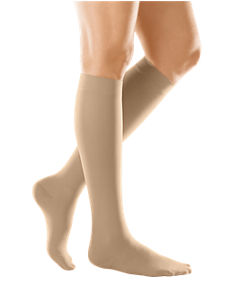
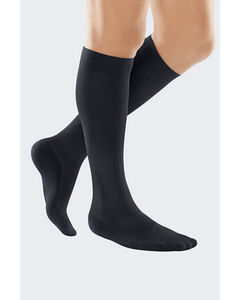
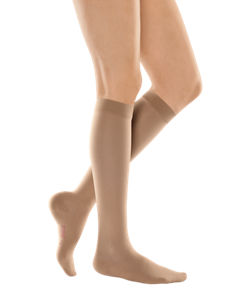
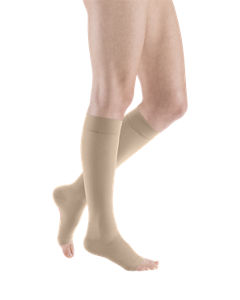
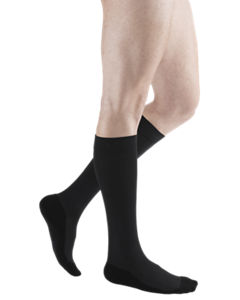
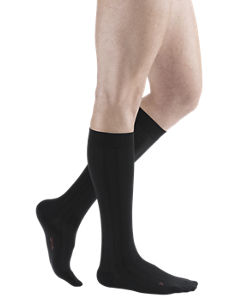
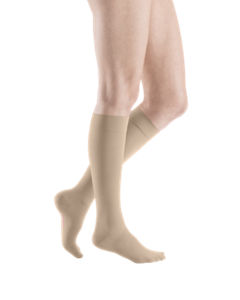
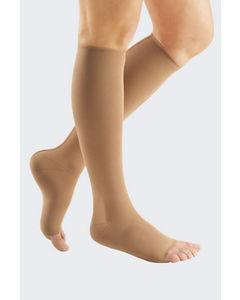
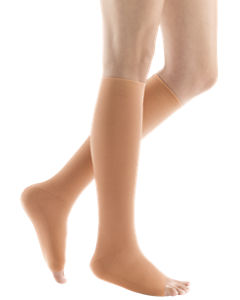
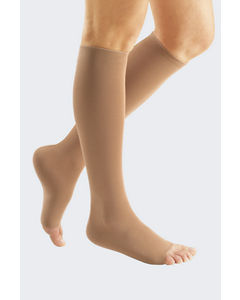
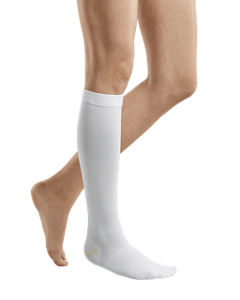
Compression socks apply graduated pressure to the lower legs and ankles to support circulation in the lower extremities. This pressure helps guide blood back towards the heart, supports the calf muscle pump and can improve blood flow, especially during prolonged sitting or standing. As a result, compression socks can help reduce leg swelling, ease feelings of heaviness, support the leg veins and lower the risk of blood pooling that may contribute to circulation problems. At medi UK, compression socks are designed to balance medical effectiveness with everyday comfort for work, travel and activity.
How to put on and take off compression socks correctly?
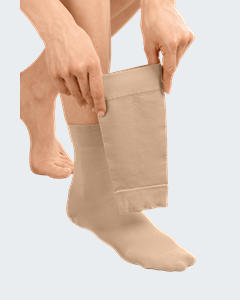
Putting on and taking off compression socks correctly is important to optimise their effect and achieve optimum results while ensuring that they fit comfortably. To put on the compression socks, first turn them inside out so that the heel is facing outwards. Then slowly insert your foot into the sock and gently pull it up until the sock fits comfortably. To remove, pull the sock gently over your foot and ankle, taking care not to apply excessive force to avoid damaging the material.
Which compression socks do NHS recommend?
The NHS does not recommend specific brands. Instead, it advises wearing appropriately fitted compression socks or compression stockings based on individual needs and medical conditions such as varicose veins, chronic venous insufficiency or risk of deep vein thrombosis. In the UK, products from trusted medical supply store brands like medi are commonly used in clinical and home settings because they meet recognised medical standards and offer different compression levels for professional guidance.
How many hours a day should you wear compression socks?
For everyday use, travel or mild swelling, compression socks are typically worn during the day and removed at night. Many people wear them for 6–12 hours, depending on activity level and comfort. They are usually put on in the morning and taken off before going to bed, unless a healthcare professional advises otherwise. In some medical situations, guidance may differ, including recommendations to put the legs up or briefly lie flat to support venous return.
What is the downside of wearing compression socks?
When properly fitted, compression socks are safe for most people. However, potential downsides include discomfort, tightness or skin irritation if the size or compression level is incorrect. Wearing compression that is too strong may worsen symptoms in people with certain arterial conditions. For this reason, it’s important to choose the right product and not assume that most compression socks are suitable for every body type or medical situation. If pain, numbness or skin changes occur, use should be reviewed with a healthcare professional.